
We all understand, almost instinctively, why monopolies are bad. Less choice for customers. Less accountability from the companies holding the power. Less value delivered to the people paying the bills. These are not controversial ideas. They are foundational principles taught in introductory economics courses, debated on the floors of legislatures, and enshrined in antitrust laws across the globe. When a single company corners a market, alarm bells ring. Regulators intervene. Consumers protest.
And yet, in the world of digital advertising — a market that now exceeds $1 trillion in global spending — we have collectively shrugged our shoulders and accepted a concentration of power that would be considered intolerable in almost any other industry.
According to WARC’s Global Ad Forecast, worldwide advertising expenditure reached approximately $1.19 trillion in 2025, with growth projected to accelerate to over $1.30 trillion in 2026. The digital share of that market continues to climb, now representing roughly three-quarters of all ad dollars spent on earth.
Here is where it gets uncomfortable.
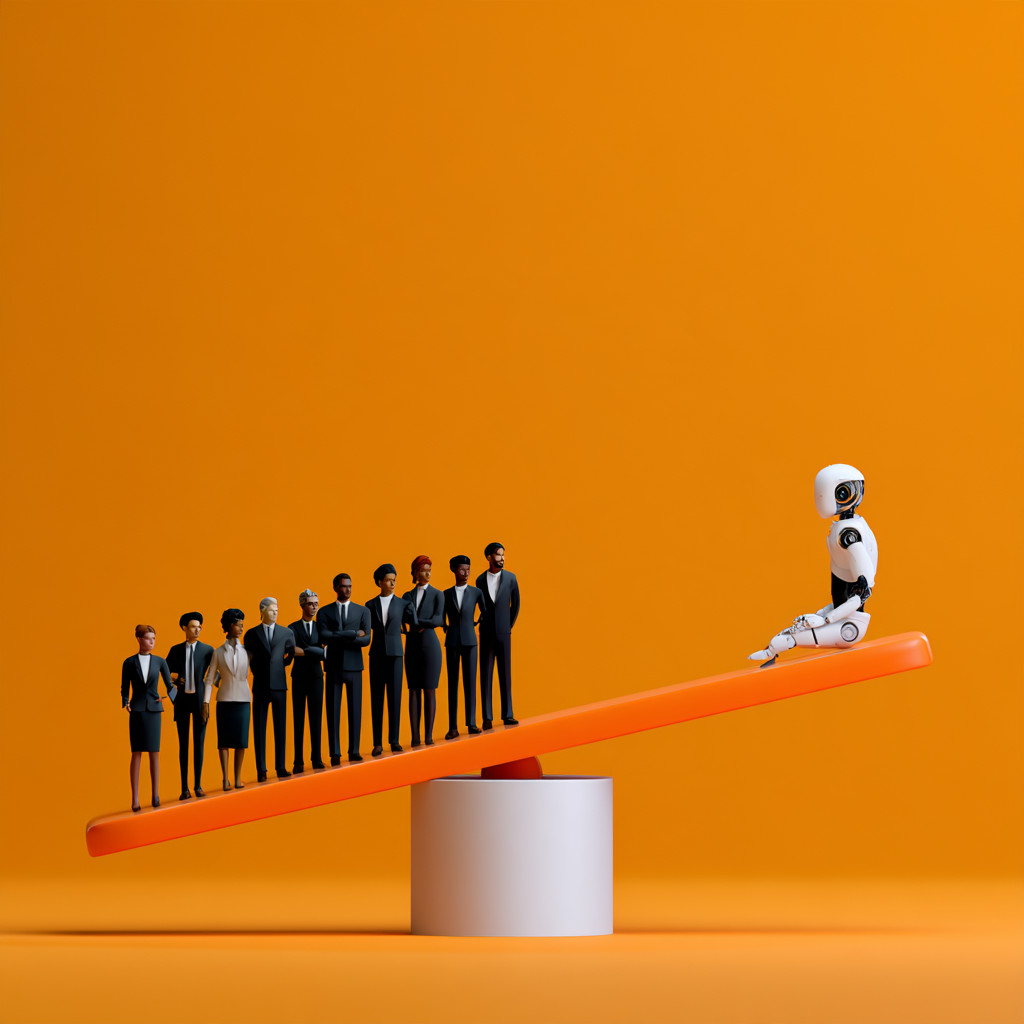
According to eMarketer, Google, Meta, and Amazon alone captured 62.3% of global digital ad spending in 2025, a share that is forecast to continue growing through at least 2028. Add ByteDance’s TikTok — which commands nearly 5% of the global digital ad market and is growing faster than any of the incumbents — and you are looking at four companies controlling roughly two-thirds of every digital advertising dollar spent worldwide.
In the U.S. market, the picture is even starker: research from Moffett Nathanson found that five major tech platforms — Meta, Alphabet, Amazon, Microsoft, and TikTok — now capture approximately 65% of the total U.S. ad market, up from just 22% a decade ago, while the rest of the market is actually shrinking.
We do not call this a monopoly because it is not one company. It is four. Somehow, that distinction has been enough to quiet the monopolistic alarm bells. But the practical effects are indistinguishable from the monopolistic dynamics we try to prevent.
The Consequences Are Real
The effects of this concentrated of share of ad dollars, are dire and far reaching.
Advertisers have few meaningful choices. When two-thirds of the digital ad market funnels through four platforms, the notion of a competitive marketplace becomes a polite fiction. Yes, there are other places to spend advertising dollars. But the scale, reach, and data infrastructure of these four giants make them functionally unavoidable for any marketer operating at scale. The result is not a marketplace — it is a toll road with four booths, and every advertiser must pass through at least one.
Platforms have little incentive to be accountable. When advertisers have nowhere else to go, why would any of these companies bend over backward to earn advertiser trust? The competitive dynamics that normally force companies to improve their offerings, respond to complaints, and treat their customers as partners simply do not apply with the same force when the alternatives are so limited. These platforms compete with each other at the margins — fighting over incremental share — but these are minor skirmishes when, in total, these firms capture roughly 65 cents of every ad dollar spent. The fundamental power imbalance between platform and advertiser remains untouched.
Transparency is not a priority. Perhaps nothing illustrates this more clearly than a recent incident involving Meta. In April 2026, Facebook quietly acknowledged a measurement glitch that affected ad reporting for approximately five days. No detailed explanation was provided. No context was offered to help advertisers understand the scope or nature of the error. No guidance was given on whether to discard the data from that period entirely or attempt to salvage it. All Facebook did was acknowledge that something went wrong, and expected advertisers would simply absorb the uncertainty and move on. And they did — because what else were they going to do?
This is not an isolated case. Meta has a documented history of measurement errors and metric changes that leave advertisers scrambling, from the major ad glitch that disrupted CPMs in April 2023 to the wholesale deprecation of established page metrics throughout 2024 and 2025. Each time, the response from the industry is the same: frustration, a shrug, and BAU (Business As Usual).
Innovation serves the platform, not the marketer. The innovation happening inside these companies is real, but it is pointed in a very specific direction: automating the process of running more ads. AI-powered campaign tools, automated bidding, algorithmically generated creative — all of these advances are designed to make it easier and faster to push more advertising through the platform’s pipes. What you see far less of is innovation aimed at improving marketer ROI in ways that might reduce spending. The platforms have no incentive to help advertisers spend less. Their business model depends on the opposite.
The Damage Goes Deeper Than Wasted Budgets
The consolidation of digital advertising into so few hands does not just hurt marketers. It damages the entire ecosystem.
These platforms monetize all kinds of audiences — real ones and fake ones. Bot traffic, fake accounts, and fraudulent impressions remain persistent problems that the platforms have limited incentive to solve aggressively. Every fake impression is still a paid impression. Every bot click still generates revenue. The result is that marketers are paying to reach people who do not exist, wasting significant portions of their budgets on phantom audiences.
Content has been weaponized, and these platforms are the delivery mechanism. From coordinated attacks on democratic institutions to the alarming rise of antisemitism and extremist rhetoric, harmful content reaches millions of people at speed and scale because these advertising platforms make it trivially easy to do so. The content arrives in a prettily wrapped box — algorithmically optimized, precisely targeted, indistinguishable in format from legitimate information. The platforms profit from the engagement this content generates, and the social cost is internalized to the rest of us.
Consumers, meanwhile, have almost no tools to understand who is behind the content they see or to verify whether what they are reading is true. The information asymmetry is staggering. A well-funded bad actor and a legitimate journalist look identical in a social media feed. There is no meaningful infrastructure for consumers to vet the source or accuracy of the content served to them — and the platforms have shown little interest in building anything that might throttle their revenue. Verification is not in the interests of ad platforms which is why we see nothing to address the problem.
And publishers — the organizations that actually create the content these platforms monetize — are caught in a vise. Their work can be posted, shared, and consumed for free across platforms that capture the advertising revenue it generates. If publishers put up a paywall to protect their investment, important content becomes unavailable to the many people who cannot afford subscriptions. If they do not, they struggle to sustain the journalism, analysis, and creative work that the ecosystem depends on. Either way, the value flows upward to the platforms.
The Windmill Problem
There are few market pressures to force these companies to do better. And the conventional wisdom says there is nothing anyone can do about it.
No one can displace Google’s advertising juggernaut.
No one can replicate Meta’s social connectivity.
No one can match Amazon’s retail data.
No one, it would seem, can do anything at all.
It feels like Don Quixote tilting at windmills. Pointless. Maybe even dangerous.
This is why no one has seriously tried.
The challenge appears so insurmountable that the rational response seems to be acceptance. Learn to work within the system. Optimize your campaigns. Negotiate what you can. Move on.
That type of thinking is a self-fulfilling prophecy. If everyone agrees that change is impossible, then of course nothing changes. The status quo is preserved not by its own strength, but by the collective resignation of everyone who might challenge it. Nothing will change if nothing changes.
We Reject This Thinking
We reject this thinking. Our company, The Trust Web, is starting from the premise that a trusted internet – for people, for advertisers, and publishers – is possible. Then we got busy building an alternative advertising ecosystem to challenge the unchallengeable.
At its heart is the creation of a true “pull” engine for marketers and consumers. The idea is not new. Pull-based advertising, where consumers signal their interests and advertisers respond to genuine demand, has been attempted many times before and failed many times.
Today is a new ballgame because of AI.
By focusing on topics as the core data foundation, a cascade of innovation becomes possible. AI can capture audience intent in the moment — not based on weeks of behavioral surveillance, but based on what someone is genuinely interested in right now. Advertisers do not have to track everyone all the time, because relevance is determined by context and stated interest, not by invasive data collection. The cost of running advertising goes down because a simpler system does not require feeding multiple intermediary platforms their cut. And publishers can finally monetize their valuable content in a system that recognizes and rewards the work they do.
Here is the critical insight: this system does not have to displace what exists. It just has to be a functioning alternative for the benefits to be realized.
By siphoning away even two or three percent of ad budgets into a new, transparent, topic-driven alternative, the dominant platforms will be forced to respond with better quality options of their own. Competition — even modest competition — changes behavior. A system built on the absence of tracking means people can go online and trust that their privacy remains private. And advertisers gain the ability to diversify their ad investments, reducing the risk that comes with dependence on a handful of platforms that answer to no one.
Here We Come
Yes, we are tilting at windmills. We know what we are up against. We know the odds. We know how many smart people have looked at this problem and decided it was not worth the fight.
We also understand this is not a one company initiative. The Trust Web is meant to be a collective of aligned companies to create something important that offers real value. The Trust Web philosophy is that consumers can trust the web they create for themselves and brands can trust the results of their efforts.
Simple to understand if not to execute.
We are undeterred. Nothing is more inspiring than the spirit captured in the words of the song, Impossible Dream from Man of La Mancha. The song reminds us that dreaming an impossible dream means striving for something better, no matter how difficult the road;
“This is my quest, to follow that star,
No matter how hopeless, no matter how far
To fight for the right without question or pause
To be willing to march into hell for a heavenly cause.”
Our willingness to take on windmills is driven by the deep knowledge that the world will be better for it. Hate speech that divides will be brought under control. Bad actors’ ability to hide within an unverified structure will be weakened. The press, again, has a business model that allows them to speak truth to power.
However long the journey, we will muster every ounce of courage to reach the unreachable. It must be done because if not us – then who?
Get ready windmills — here we come and we are not backing down. Not our firm and not our collective.