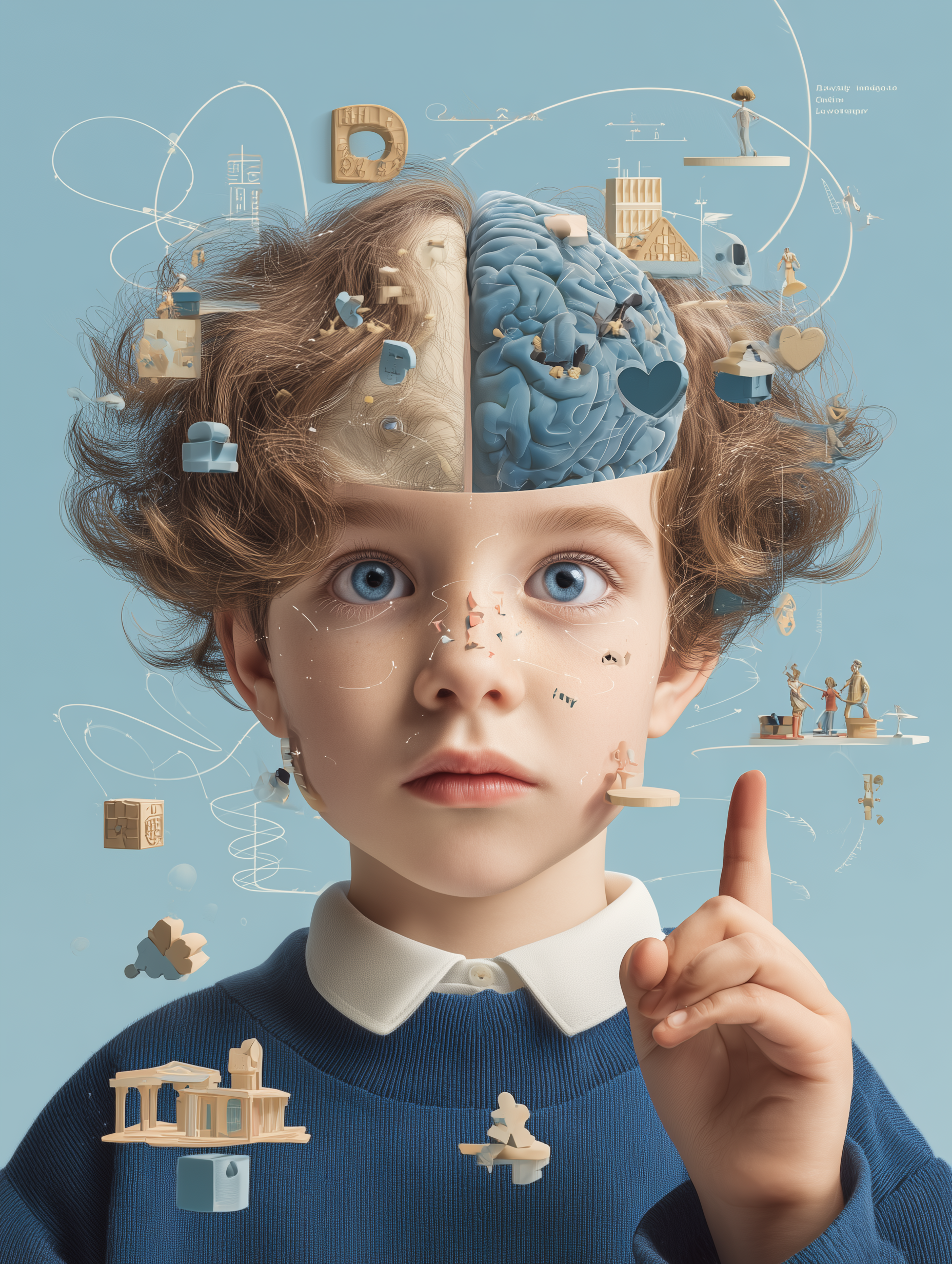

Every truly transformative technology eventually rewrites the body that wields it. We tend to think of our tools as things we use—external, separate, under our control. But the deep history of human evolution tells a different story. The most powerful technologies don’t just change what we can do. They change what we are.
And if that pattern holds, artificial intelligence isn’t just another technology to be wielded as a tool. It may be the next great force that reshapes human biology from the inside out.
The Precedent Is Already Written in Our Bodies
This isn’t speculation. It’s anatomy. The evidence that technology physically re-engineers the human animal is written into our skulls, our jaws, our guts, and our sleep cycles. Consider what came before.
Fire: The Technology That Built Our Brains
Most people think of fire as a survival tool—warmth, protection, light. But many evolutionary biologists argue that fire did something far more radical: it physically re-engineered our anatomy.
The mechanism was cooking. Raw food is extraordinarily difficult to digest and yields relatively little usable energy. By applying fire to meat and tubers, our ancestors essentially pre-digested their meals, breaking down collagen in animal tissue and starches in plants before the food ever reached the stomach.
The downstream effect was staggering. Cooking made calories vastly more accessible and efficient. That surplus of energy funded the most expensive organ in the body: the brain. Over hundreds of thousands of years, human brains grew dramatically larger while our energy-intensive digestive tracts—no longer needed to process tough raw fiber and gristle—actually shrank. We traded gut for grey matter. A technology didn’t just help us survive. It redesigned the architecture of the human body, selecting for intelligence over digestive brute force.
Agriculture and the Shrinking Jaw
Then came farming. The transition from hunter-gatherer subsistence to agricultural technology—cultivation, milling, boiling—introduced soft grains and cooked starches as dietary staples.
Before agriculture, humans had much broader, more robust jaws. They had to. Chewing tough, fibrous raw foods for hours a day demanded powerful jaw muscles and wide dental arches. But the technological shift to softer, processed food meant the masseter muscles didn’t have to work nearly as hard. Over generations, the human jaw shrank.
Here’s the cruel irony: our teeth didn’t shrink with it. They’re still roughly the same size as our ancestors’. But our technologically softened jaws no longer have the room to hold them. This is why dental crowding is nearly universal in modern humans. Wisdom tooth extraction isn’t a quirk of modern medicine—it’s a consequence of ancient technology catching up with our bones.
The Printing Press and the Outsourcing of Memory
Before Gutenberg, human cultures depended on oral tradition. Bards, griots, priests, and storytellers carried entire histories, legal codes, and bodies of knowledge in their heads. The capacity for prodigious memorization wasn’t a talent reserved for the gifted—it was a survival skill, trained from childhood and reinforced by an entire culture that depended on it.
The printing press changed all of that. Once knowledge could be reliably stored on paper, the intense pressure to maintain vast internal libraries of memorized information began to relax. Why spend years memorizing what can now be accessed in the pages of a book? Over centuries, the cultural scaffolding that once trained extraordinary memory slowly eroded. We didn’t lose the capacity for deep memorization—we lost the practice of it, and with it, an entire cognitive orientation toward the world.
Artificial Light and the Hijacking of Sleep
For the vast majority of human history, biology was governed by the sun. Darkness triggered melatonin production, winding the body down into sleep. Dawn reversed the cycle. The rhythm was ancient, reliable, and deeply embedded in our physiology.
Then came candles, gas lamps, and eventually the omnipresent glow of LED screens. Constant exposure to artificial blue light now suppresses our natural melatonin production in ways our ancestors never experienced. The result is a fundamental alteration of the human sleep-wake cycle—a state that researchers have described as “permanent twilight.” The consequences ripple outward into metabolic health, hormonal balance, immune function, and cognitive performance.
We didn’t choose this. No one sat down and decided to rewire the human circadian rhythm. It happened as a side effect—an unintended biological consequence of a technological convenience.
The Pattern
Fire reshaped our brains and guts. Agriculture reshaped our jaws. The printing press reshaped our memory. Artificial light reshaped our sleep. In every case, the pattern is the same: a powerful technology changes human behavior at scale, and human biology follows, quietly, over time, in ways no one intended or predicted.
Now look at what’s arriving.
AI and the Next Reshaping
I don’t worry that AI will destroy us all. That’s the stuff of science fiction—dramatic, cinematic, and mostly beside the point.
What I worry about is at once subtler and more profound: that AI will fundamentally change our humanity.
Not through some apocalyptic event, but through the same slow, invisible process that fire and agriculture set in motion. Through daily use. Through convenience. Through the gradual outsourcing of cognitive tasks we once performed ourselves.
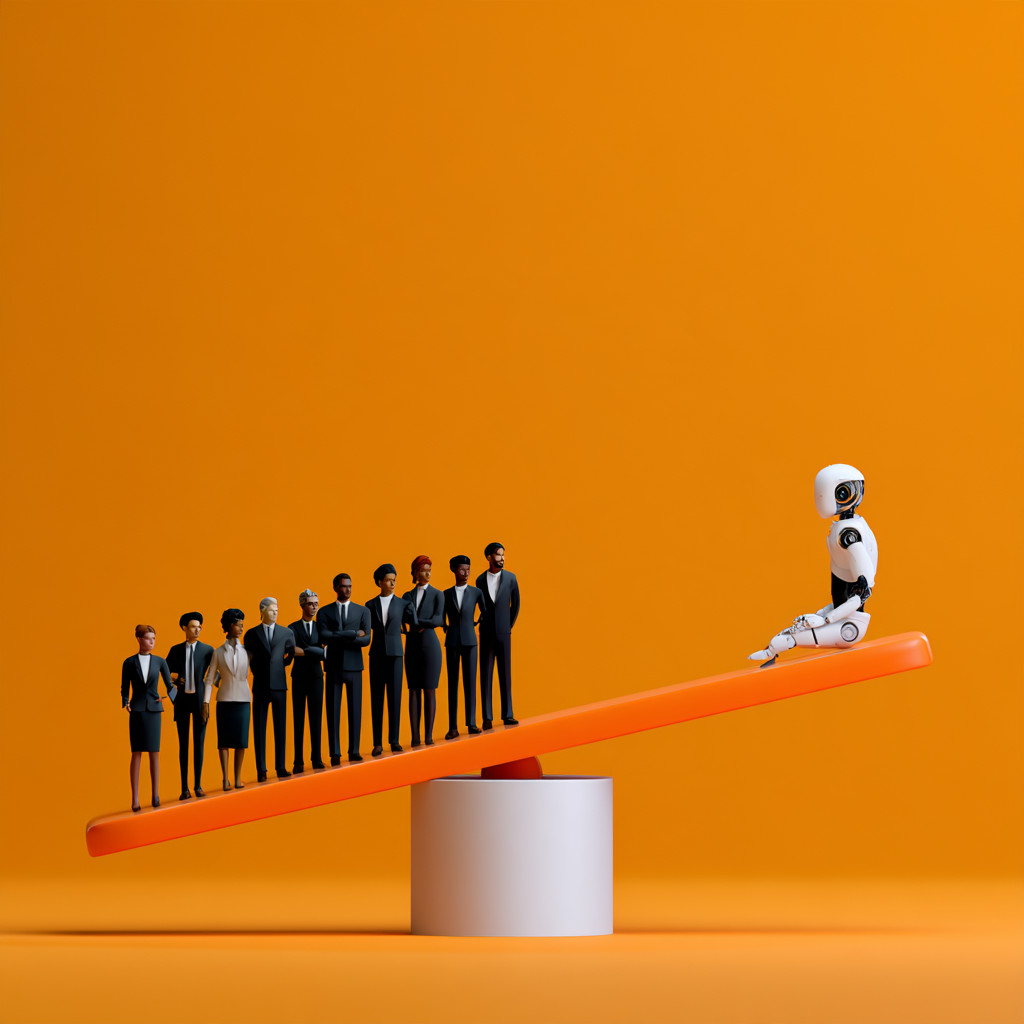
Think about what AI is already beginning to do. It drafts our writing, summarizes our reading, organizes our schedules, generates our images, writes our code, and answers our questions. It is, in effect, a cognitive tool of extraordinary power—and like every powerful tool before it, it will change not just what we do with our minds, but how our minds are organized in the first place.
The Reorganization of Thought
With new tools to handle tasks for us—from the mundane to the creative—we will inevitably reorganize our intellectual lives. The printing press made memorization less essential; AI may do something similar to synthesis, analysis, and original composition. When a machine can produce a competent first draft of nearly any written argument, what happens to the human practice of struggling through that draft yourself—the slow, generative friction where ideas are actually formed?
When AI can instantly retrieve, cross-reference, and summarize any body of knowledge, what happens to the deep reading that once forced us to build mental models of complex subjects? When it can generate a dozen creative options in seconds, what happens to the patience required to sit with ambiguity and let an original idea emerge on its own?
These aren’t hypothetical questions. They describe a shift in cognitive habit that is already underway.
What We Might Lose Without Noticing
The most dangerous changes are the ones we welcome. No one mourned the loss of epic memorization when books became cheap. No one protests the softening of the jaw. These changes feel like progress—and in many ways they are. But they come with costs that only become visible in retrospect.
The risk with AI is not that it makes us stupid. It’s that it makes certain kinds of thinking unnecessary—and in doing so, allows the cognitive muscles behind those kinds of thinking to quietly atrophy.
The struggle to articulate a vague idea. The discipline of holding contradictory evidence in mind. The creative restlessness that comes from not having an instant answer. These are not inefficiencies to be optimized away. They are the processes through which human thought deepens and matures.
If AI handles the hard parts, we may find ourselves in the cognitive equivalent of a soft-food diet—comfortable, efficient, and slowly reshaping the structure of something we didn’t realize was load-bearing.
The Future is Hard to Predict
We all are working to figure out how leverage AI to best effect in marketing. Fair enough, but the biological impacts of AI are far broader than that.
How exactly this plays out is anyone’s guess. The history of technology and biology tells us that the changes will come, that they will be significant, and that we will not see most of them until they’re already embedded in us. Fire didn’t come with a warning label. Neither will AI.
What we can do is pay attention. We can notice when a cognitive habit starts to feel obsolete and ask whether that obsolescence is a genuine gain or a hidden loss. We can use AI deliberately, the way a weightlifter uses machines—as a supplement to strength, not a replacement for it.
Because the question isn’t whether AI will change how we think. It will.
The question is whether we’ll be paying attention when it does.