
A lot of hype explores all the ways AI will disrupt everything – all at once.
From business to families, AI will be significant in everyone’s lives. This is understood at a basic level even if we don’t understand all the implications.
Yet something far more profound is going on about why AI is so disruptive. If we think about AI in evolutionary terms, a new insight emerges.
Human Progress Has Been About Knowledge Transfer Advancements
< 145,000 years ago, humans developed the first technology for knowledge transfer – speech. This was the spark that gave primacy to stories to teach us how to survive and thrive.
> 50,000 years ago, humans created art work to transfer knowledge about the natural world.
> 6,000 years ago, writing became the tech breakthrough that accelerated all aspects of knowledge transfer – from finance to philosophy.
> The next breakthrough, in 1440, was when the printing press became jet fuel in human’s ability to transfer knowledge more widely and more broadly.
The next 500 year saw no real change in the mechanisms for knowledge transfer.
> Then starting in 1990s – distributed software became the central pillar of massive knowledge transfer.
> In 2000’s – the Internet broke all boundaries for knowledge transfer. Now, more information was more available to more people than ever before.
Now, 25 years later, AI enters.
It is clear this is the next big leap in humans ongoing advancement in knowledge transfer.
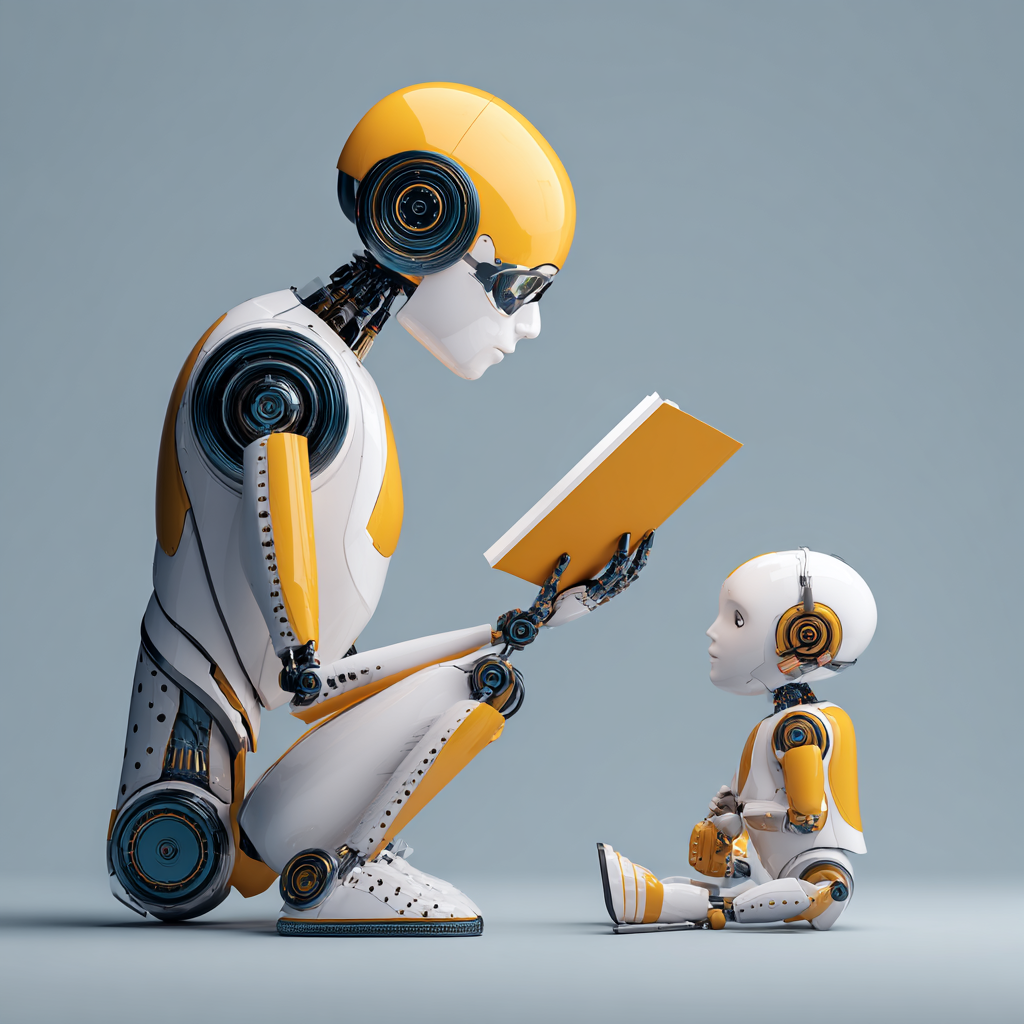
Yet, in the story of knowledge transfer, AI makes a sharp left turn. For 150,000 years, knowledge transfer was a human-centric endeavor; building on what came before. With AI, something new is happening. AI takes in all the information but then processes it and transforms it into a non-human output in the process of knowledge transfer.
In fact, AI’s abilities transcends the engineers who created it but creates new types of non-human information that is transferred back to humans. In the long chain of humans perfecting knowledge transfer, AI breaks this continuous human to human knowledge transfer into human to machine knowledge transfer.
This is startingly new.
This is paradigm busting.
This is not business as usual.
Strip away all the hyperbolic hand wringing about AI, the new model for knowledge transfer might just be the most disruptive impact of AI of all.